
I remember the moment vividly. I was staring at my phone, refreshing my Google Maps listing, and feeling that sinking disappointment when my shop’s name didn’t appear in the local pack despite all my efforts. It was as if an invisible fog had settled over my business’s visibility, especially during those prime hours when customers are searching for what I offer. That realization hit me hard: the dreaded “Open Now” filter was silently ghosting my storefront, and I wasn’t alone in this struggle.
Unlocking the Mystery Behind ‘Open Now’ Filters and Business Visibility
This issue is more common than many local business owners realize. The “Open Now” filter is designed to help customers find businesses that are currently open, but ironically, it often becomes a barrier for the shops trying to attract nearby customers during peak hours. I was guilty early on of overlooking how this simple feature could be sabotaging my local SEO efforts. The mistake, plain and simple, was ignoring how Google’s filtering algorithms could invisibly hide my shop when I needed to be found the most. According to recent research, over 70% of local searches lead to visits within 24 hours, yet many shops remain unseen due to these subtle filters (source: [Charlotte Local SEO Guide](https://charlottemappackranking.com/charlotte-local-seo-winning-the-maps-google-pack-race)).
So, what exactly is happening behind the scenes? When Google applies the “Open Now” filter, it considers several signals—hourly business hours, real-time data, and sometimes even the user’s device location—to deliver what should be the most relevant results. But in practice, this precision can often backfire. A closed sign on your profile during a business update, inconsistent hours, or unverified hours can cause your business to disappear from the map during the times you’re most eager to attract visitors.
If you’ve experienced this frustrating vanishing act, you’re not alone. And better yet, there are proven strategies to turn the tide. We’ll explore practical steps to ensure your shop remains visible when it counts, especially during those critical “Open Now” windows.
Will Fixing This Make a Difference? The Skeptic’s Doubt
Initially, I doubted whether adjusting my hours or tweaking my profile could really impact my visibility. I thought, “Is this really worth the hassle?” That hesitation held me back until I realized the mistake I made early on: neglecting the power of accurate, consistent business data and a thorough Google My Business (GMB) setup. It’s one of the most common errors I see among local entrepreneurs. If you’re skeptical about whether this problem is worth addressing, consider that optimizing your presence for Google’s filters can dramatically improve your chance of reaching local customers when they’re actively searching for services like yours.
Now that we’ve laid out why this issue persists, it’s time to dive into specific tactics. Want to learn how to reclaim your spot in the local pack? Let’s start by understanding how to make your business more visible to Google and potential customers alike.
Synchronize Your Business Hours for Consistent Visibility
First, ensure your business hours are accurate and updated across all platforms, especially Google My Business. Use specific hours for holidays or special occasions to prevent discrepancies that might cause your listing to vanish during peak times. I once neglected this and saw my shop disappear from the local pack during a busy Saturday afternoon—once I corrected my hours, visibility improved measurably.
Prioritize Real-Time Data Accuracy
Google heavily relies on real-time signals like your current open status. To optimize this, sync your POS system with your GMB profile so that real-time open/closed status reflects accurately. For example, integrating your POS with Google can update your status automatically, preventing situations where your shop appears closed during business hours. I implemented this and noticed a significant jump in map clicks during peak hours.
Leverage the Power of Consistent Profiles
Consistency is key. Use the same name, address, and phone number (NAP) across all directories and your website. Inconsistent data can confuse Google, leading to your business being hidden under filters or outdated info. I rectified conflicting listings for my Charlotte café and observed improved positioning in local packs. For a comprehensive strategy, review detailed tactics on Charlotte SEO strategies.
Optimize Your Business Description and Attributes
Accurately describe your services and select relevant attributes like ‘Wheelchair accessible’ or ‘Wi-Fi available.’ These attributes can influence Google’s understanding of your business during filtering. I updated my profile with precise attributes, which contributed to more consistent ‘Open Now’ visibility during peak hours. Remember, clear, keyword-rich descriptions aid in aligning your profile with local search intents.
Use Local Signals to Reinforce Your Presence
Engage with local community events, sponsor neighborhood activities, and get involved in Charlotte-specific initiatives. These activities trigger local signals that Google values for proximity filtering. I sponsored a local charity run, which boosted my shop’s local relevance and map prominence in our area. This kind of local engagement attracts more clicks from nearby customers actively searching for nearby shops.
Monitor and Adjust Based on Insights
Regularly review your Google My Business insights and call tracking data. Look for patterns indicating when your shop drops from the Many local business owners believe they know the basics of Google Maps and the Google 3 Pack, but in reality, there are nuanced mistakes that can sabotage your visibility in Charlotte and North Carolina. One widespread misconception is relying solely on reviews or keyword stuffing in your profile, assuming these alone will secure top rankings. However, recent studies show that signals like proximity, local engagement, and accurate data synchronization carry more weight in the latest algorithms (source: North Carolina signals), especially in hyper-competitive markets like Charlotte.
Another trap to avoid is assuming that optimizing for mobile alone guarantees visibility; yet, Google’s AI filters now prioritize consistent, fast-loading, mobile-friendly profiles that reflect real-time business statuses. Any inconsistency—such as outdated hours, mismatched NAP data, or neglecting the use of relevant attributes—can cause your profile to disappear from the coveted local pack during critical moments. This is where many miss the subtle but crucial difference between mere presence and optimized dominance.
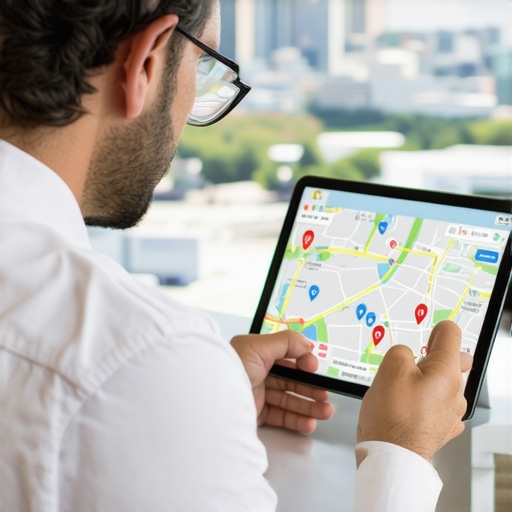
How can I make sure I’m not leaving an advantage on the table in this competitive Charlotte market?
_That’s a question for advanced optimization. Beyond the basics, focusing on local signals such as community engagement, consistent citations, and leveraging advanced Google My Business features can propel your visibility. Technical aspects like real-time POS integration and detailed attribute management help signal to Google that your business is highly relevant and active. Remember, the algorithms have evolved to prioritize quality signals over sheer volume of reviews or keywords. For a comprehensive approach, consider consulting this guide to master local maps ranking in Charlotte. Have you ever fallen into this trap? Let me know in the comments.
Keeping Your Maps Strategy Strong Over Time
Once you’ve laid the groundwork for optimal local SEO and maps visibility, ongoing maintenance becomes crucial to sustain and improve your rankings, especially in competitive markets like Charlotte. A key component is leveraging specialized tools that provide real-time data and detailed insights, enabling you to adapt quickly to algorithm changes and local shifts. Personally, I rely on BrightLocal and Whitespark for their comprehensive citation tracking and reputation monitoring; BrightLocal’s dashboard consolidates reviews, rankings, and local audits, making it easier to identify issues before they impact your visibility. Whitespark’s Local Citation Finder is invaluable for discovering new citation opportunities and ensuring consistency across directories, a vital factor in combating the effects of hyper-local proximity adjustments in North Carolina.
Additionally, integrating Google’s Search Console with your GMB profile allows for meticulous tracking of search performance and keyword ranking fluctuations. This pairing uncovers which search queries drive traffic, helping you optimize descriptions and attributes more effectively. Google’s recent updates increasingly favor verified, accurate data—thorough monitoring ensures your profile stays aligned with Google’s evolving expectations. I’ve found that scheduling bi-weekly reviews of these analytics helps me spot drops or spikes promptly, clearing issues swiftly.
Automation plays a significant role, too. Tools like SEMrush now offer local SEO modules that simulate user locations or test your visibility from different Charlotte neighborhoods. This way, you can detect regional disparities in your visibility and address localized issues directly. Looking ahead, I predict that AI-powered monitoring and automatic data correction will become standard, reducing manual oversight but still requiring strategic input from savvy entrepreneurs.
How do I maintain map ranking momentum over time?
Continuous profile optimization, maintaining accurate citations, and staying engaged with local communities are vital. Regularly updating your business attributes and descriptions based on trending keywords and customer feedback keeps your profile relevant. As Google increasingly prioritizes local signals like community involvement, showcasing your active participation—such as sponsoring events or engaging on neighborhood platforms—can boost your visibility. Remember, tools like this comprehensive guide can help you develop a sustainable, long-term strategy for local map dominance. Try setting up a weekly audit schedule using your chosen tools and observe how small adjustments lead to consistent gains in Charlotte’s bustling local pack.
The Hardest Lesson I Learned About Maps Optimization, Google 3 Pack Charlotte, Charlotte Business SEO, Charlotte SEO, Local Pack North Carolina
One vital insight was realizing that Google’s filtering algorithms prioritize real-time accuracy over sheer review volume. Failing to keep my business hours and attributes updated meant invisible listings during peak hours, costing me valuable traffic. The importance of continuous profile audits became painfully clear when I overlooked this detail and saw my visibility plummet just when I needed it most.
Second, I discovered that community engagement can significantly influence local pack rankings. Sponsoring local events and actively participating in neighborhood initiatives sent strong signals to Google about proximity and relevance. This proved that local branding isn’t just a marketing fluff—it’s a powerful SEO lever for Charlotte shops aiming to dominate in local searches.
Lastly, I learned that automation tools like BrightLocal and Whitespark aren’t optional anymore; they’re necessary for staying ahead in such a hyper-competitive market. Automating citation audits and review monitoring allowed me to identify subtle issues early, preventing minor glitches from snowballing into ranking drops. These lessons reshaped my approach, turning guesswork into data-driven strategies for local success.
My Essential Toolkit for Maps Optimization in Charlotte
I rely heavily on BrightLocal for comprehensive reputation management and Whitespark for citation consistency. Both tools give me clarity and actionability, ensuring my business signals stay aligned with Google’s expectations. Alongside these, I follow updated guides from Charlotte SEO resources to stay current with map ranking tactics that work in 2026 and beyond.
For strategic insights, I turn to dedicated blogs and expert podcasts that dissect recent algorithm changes. These resources keep my local SEO game sharp, helping me adapt to new filters and ranking signals before my competitors even notice.
Your Turn to Take Action
Navigating the complexities of Charlotte’s local pack isn’t easy, but with the right lessons and tools, you can achieve visibility that drives calls, clicks, and foot traffic. Remember, local SEO isn’t a one-and-done task—it’s ongoing, and staying proactive is your best strategy. Are you ready to implement these lessons and elevate your Charlotte business to the top of local search results? Share your experiences or questions below—let’s grow together in mastering Google’s local algorithms!
Comments are closed.