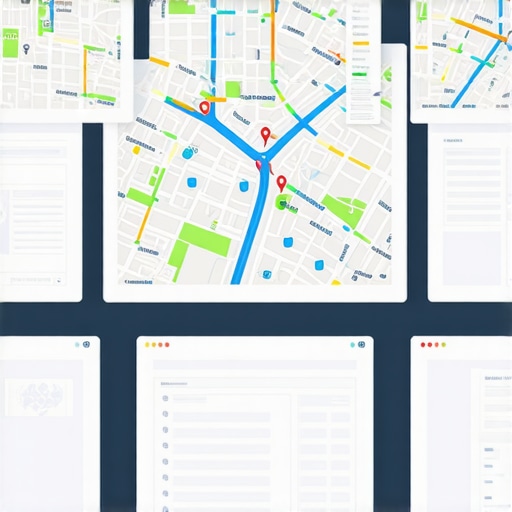
Why Embedding Your Map on Every Page is Actually Hurting Your Charlotte Ranking
For years, the “Map in the Footer” was the gold standard of local SEO. If you owned a boutique in the South End, a law firm in Uptown, or a plumbing business serving the greater Mecklenburg County area, the advice was always the same: embed your Google Map on every single page of your website. The logic seemed sound – by showing Google your location on every URL, you were reinforcing your local relevance. But as we navigate the landscape of 2026, the game has fundamentally changed.
I’m Emma Forbes, and I’ve spent the last decade helping Charlotte businesses navigate the shifting tides of search. What I’m seeing now is a stark departure from the “more is better” philosophy. In fact, site-wide map embeds are becoming one of the most common technical “anchors” dragging down local rankings. While map embeds provide local signals, the shift toward “hyperlocal precision” over “general visibility” means that over-automation is now counterproductive. If you want to stay ahead, you need to understand why the old playbook is failing and how to implement Charlotte SEO Strategies to Dominate Google’s 3 Pack in 2025 and beyond.
The Technical Toll: Page Speed and Core Web Vitals
The first reason site-wide map embeds are hurting your Charlotte business isn’t about keywords – it’s about performance. Google’s Core Web Vitals (CWV) are no longer a “tie-breaker” in the algorithm; they are a foundational requirement. When you embed a Google Map, you aren’t just adding a static image. You are calling a massive third-party script from the Google Maps API.
Every time a potential customer in Ballantyne or Lake Norman clicks on your site from their mobile device, their browser has to download, parse, and execute that map script. This significantly increases Total Blocking Time (TBT) and Largest Contentful Paint (LCP). In a city like Charlotte, where mobile search dominance is absolute, a slow site leads to high bounce rates. Users looking for immediate services – like an emergency roofer or a last-minute dinner reservation – won’t wait four seconds for a map in your footer to load. Using professional local seo software to analyze your site speed often reveals that the map embed is the single largest contributor to script execution delay.
When your site fails the 2026 Mobile Map Test, Google notices. A high bounce rate sends a signal that your site is not providing a good user experience, which can lead to a drop in your organic and map pack positions. Instead of blindly embedding, smart businesses are using google maps performance tools to identify exactly how much weight these scripts add and are opting for “lazy loading” or static image placeholders that only activate the full map upon a user’s click.
Diluting Your Local Signal: The Relevance Problem
Local SEO thrives on three pillars: Proximity, Relevance, and Prominence. Site-wide map embeds, surprisingly, can dilute the “relevance” pillar. This is particularly true for Charlotte businesses with multiple service areas or those targeting specific neighborhoods.
Imagine you are an HVAC company based in Huntersville, but you have dedicated service pages for “AC Repair in NoDa” and “Furnace Installation in Myers Park.” If every one of those pages has a footer map pointing back to your main office in Huntersville, you are creating a relevance mismatch. Google’s 2026 local algorithm is designed to match the user’s specific intent with the most relevant local landing page. By forcing a Huntersville map onto a NoDa-focused page, you are sending conflicting signals about where your service is most relevant.
This issue was a major point of contention in the Local Search Forum (as noted by expert valentinb13 in July 2025). The consensus among top-tier strategists is that map embeds are often just “visual fluff” when applied indiscriminately. To truly rank in the google map pack, your signals must be surgical. Google business profile seo now requires a level of hyperlocal seo that site-wide embeds simply cannot provide. You want the search engine to understand your connection to specific Charlotte neighborhoods, not just your proximity to a single pin on a map.
The Problem with “Visual Fluff”
- Conflicting Geo-Signals: A map of Uptown on a Ballantyne service page confuses the proximity algorithm.
- User Disconnect: Users looking for local services in their specific neighborhood want to see local relevance, not a generic corporate map.
- Signal Noise: Site-wide embeds create “noise” that can mask the specific local search optimization efforts you’ve put into your content.
The “Over-Optimization” Filter in 2026
Google’s algorithm has become incredibly adept at spotting “SEO patterns.” In the early 2020s, many of us used map embeds as a “ranking hack.” We thought that by plastering the map everywhere, we were proving our “localness.” However, the 2026 updates have pivoted toward rewarding “user-centric design” over “ranking-centric design.”
When Google sees a map embedded on 50 different pages – including your Privacy Policy and your “Meet the Team” page – it doesn’t see a helpful feature. It sees an attempt to manipulate the google business profile ranking. This is often flagged as an over-optimization pattern. If the map doesn’t serve a clear purpose for the user on that specific page, it shouldn’t be there. If you’ve noticed that Your Charlotte Shop’s Map Rank Stalled, this over-optimization filter might be the culprit.
The goal of a modern google maps ranking service is no longer to “trick” the map pack but to demonstrate genuine authority. Google wants to see that your business is a pillar of the Charlotte community. Excessive embedding looks like a shortcut, and in 2026, shortcuts are the fastest way to get filtered out of the top 3. Instead of relying on a footer script, focus on building high-quality, local-intent content that naturally earns its place in the search results.
Strategic Embeds: Where Maps Actually Belong
So, if site-wide embeds are out, where should the maps go? The answer lies in precision. According to H10 Marketing’s 2025 guide, location pages serve as “dedicated hubs” for specific towns or regions. This is where your maps belong. For a Charlotte-based business, this means placing a map embed on:
- The Contact Page: This is the most logical place for a map. It helps users who are actively trying to find your physical location or verify your presence in the city.
- Dedicated Location Pages: If you have an office in South End and another in Lake Norman, each page should feature a map specific to that location.
- Service Area Pages: If you are a mobile service provider (like a plumber or locksmith), a map showing your service radius is helpful – but only on the pages relevant to that specific area.
To strengthen these signals without the performance hit, you should use local schema markup (JSON-LD) alongside the embed. This tells Google exactly what the map represents in a language it understands perfectly, without requiring the browser to load heavy visual assets on every page. This approach is a core part of modern google business profile seo. It ensures that your google business profile optimization efforts are supported by technical best practices rather than outdated “hacks.”
Furthermore, consider using citation building services that focus on quality over quantity. A few high-authority local mentions from Charlotte-specific directories (like the Charlotte Chamber of Commerce or local neighborhood blogs) carry far more weight than a map embed on your “Terms of Service” page.
Tracking the Impact: How to Know if Your Map is Helping
If you are currently using a site-wide map embed, I challenge you to run a test. Use a google maps rank tracker to establish a baseline for your current positions in the Charlotte area. Then, remove the map from your footer and non-essential pages, leaving it only on your Contact and Location pages. Monitor your local business seo performance for 30 days.
In many cases, businesses see an immediate improvement in their organic rankings due to the boost in page speed. More importantly, they often see a “tightening” of their map pack rankings. By removing the conflicting signals, Google can more accurately associate your business with its primary location and service areas. To get a clear picture of your current standing, you can use a google business profile audit tool to see how Google currently perceives your brand’s local footprint.
Don’t be afraid to deviate from what was once considered “best practice.” The businesses that dominate the Charlotte market are those that adapt to the algorithm’s evolution. Precision, speed, and user intent are the currencies of 2026.
Conclusion: Precision Wins in the Queen City
In the competitive Charlotte market, every millisecond of load time and every ounce of relevance matters. Site-wide map embeds are a relic of an era when the algorithm was simpler and less focused on user experience. Today, they often do more harm than good by slowing down your site and diluting your local signals. To truly rank google business profile listings in the top tier, you must prioritize quality over repetition.
Audit your site today. Remove the maps that aren’t serving your users. Focus on high-performance location pages and robust schema markup. If you’re ready to take your local visibility to the next level, it may be time to consult with a specialized local seo agency that understands the nuances of the North Carolina market. Precision wins in the Queen City – make sure your website reflects that.
Comments are closed.