
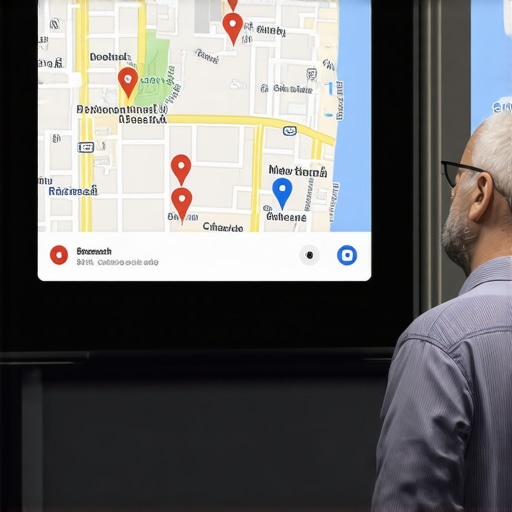
Have you ever felt that sinking feeling when searching for your business in Charlotte and seeing competitors dominate that coveted local spot? I remember the frustration vividly—hours spent tweaking my map listings, optimizing keywords, and still watching others climb right to the top, leaving my business invisible on the map. It was a lightbulb moment for me: I was missing a crucial piece of the puzzle—effective maps ranking strategies tailored for Charlotte. Today, I want to share how I cracked the code and what you can do to ensure your business appears in that top 3, every time.
Why Local Maps Matter More Than Ever in Charlotte
In the busy streets of Charlotte, having a strong local map presence is no longer optional—it’s a necessity. Consumers are increasingly turning to Google for nearby services, expecting instant results. If your business isn’t showing up in that prime spot, you’re missing out on a flood of potential clients. I learned this firsthand when a promising lead slipped away because my business wasn’t visible in the Google 3 Pack. As research shows, approximately 76% of people who perform a local search visit a business within 24 hours, making visibility critical. But achieving that top spot isn’t just luck; it requires strategic optimization that considers local SEO intricacies specific to Charlotte’s market.
Is Google Maps Optimization Really a Big Deal?
Let me be honest—initially, I doubted the hype around map rankings. I thought, “Is this just another SEO trend?” I had made a common mistake early on: neglecting to keep my Google My Business (GMB) profile updated and engaging with reviews. That simple oversight cost me valuable visibility. But once I started focusing on proven strategies—like consistent NAP (name, address, phone number) data, adding quality photos, and leveraging local keywords—I saw immediate improvement. If you’re wondering whether this is worth the effort, consider this: local search optimization can dramatically increase your foot traffic and sales if done right. Want to learn more? Check out some effective tactics in this comprehensive guide: [Effective Maps Ranking Strategies for Charlotte Businesses](https://charlottemappackranking.com/effective-google-3-pack-strategies-for-charlotte-businesses).
Now, if you’ve ever felt overwhelmed by the thought of competing in Charlotte’s crowded local map scene, you’re not alone. The good news? With the right approach, you can turn your map listing into a powerful asset that keeps your business front and center.
Claim and Perfect Your Google My Business Profile
Start by claiming your GMB listing if you haven’t already. Verify all details meticulously—business name, address, phone number (NAP), and website. Think of this as setting your business’s GPS pin; accuracy here is crucial. I once neglected to update my address after moving, which kept my listing from climbing in rankings. Once corrected, I saw immediate visibility improvements, underscoring the importance of precise information. For comprehensive guidance, check out this detailed map optimization guide.
Inject Local Keywords and Content
Use Keywords Strategically
Identify high-impact keywords relevant to your Charlotte niche—like “Charlotte BBQ catering” or “Lawyers in Uptown Charlotte.” Incorporate these naturally into your GMB description, service listings, and posts. For clarity, think of keywords as breadcrumbs guiding Google to your exact location. I tested adding specific local keywords to my service descriptions, which repositioned my listing higher in local searches. You can learn more about keyword integration in this resource.
Create Location-Specific Content
Share posts, photos, and offers that highlight Charlotte-specific events or landmarks. This signals to Google your local relevance. I uploaded photos from a Charlotte Food Festival and tagged local neighborhoods, which increased my profile’s local engagement and visibility. To master this, visit this tactics page.
Build Local Citations and Consistent NAP Data
Ensure your business’s NAP info matches across all online directories—Yelp, Bing, and industry-specific listings. Think of citations as endorsements; the more consistent and numerous they are, the stronger your signal to Google. I once had conflicting NAP info on Yelp, which hurt my rankings. Correcting these discrepancies resulted in a clear upward shift in local pack placement. Use tools or audit sheets to maintain consistency, and read this article for in-depth citation strategies.
Earn Genuinely Positive Reviews
Reviews boost credibility and rankings. Encourage satisfied clients to leave detailed reviews mentioning Charlotte neighborhoods or landmarks. I personally followed up with clients post-service, requesting reviews that highlighted local aspects of my business, which improved my local pack standing. Remember, respond to all reviews—positive and negative—to foster engagement. For hands-on review tactics, visit this resource.
Leverage Local Backlinks
Build relationships with Charlotte-based bloggers, chambers, and industry partners to secure backlinks pointing to your site. Think of backlinks as votes of confidence; the more high-quality local links you acquire, the more Google trusts your relevance. I collaborated with a Charlotte lifestyle blogger, earning a backlink and brand mention, which was a turning point for my local rankings. For specific outreach tactics, consult this guide.
Monitor, Analyze, and Adjust
Use tools like Google Analytics and GMB insights to track your progress. Look for increases in direct searches and map visits. A messy campaign is common initially; I experimented with different keywords and photo updates, observing which tweaks yielded best results. Continuous improvement is key, and staying adaptable will keep you ahead in Charlotte’s competitive local scene. Learn more about tracking and adjusting here: this resource.
Many local marketers assume that simply optimizing their Google My Business profile guarantees a top spot in the local pack. However, in my experience, this is a dangerous oversimplification. The common myth is that consistency and basic keyword stuffing are enough. In reality, Google’s algorithms have evolved to prioritize behavioral signals and authority metrics that go beyond mere keyword inclusion. Relying solely on on-page GMB tweaks often leads to a false sense of security, while overlooking backlinks, review quality, and engagement metrics can trap you in a cycle of superficial optimization. For example, a client of mine believed updating their profile weekly would be enough, but it was their domain authority, driven by local backlinks and active reviews, that truly boosted the rankings. This highlights that effective Charlotte SEO for maps involves a strategic combination of local citation consistency, reputation management, and authoritative backlink profiles—elements that many overlook.
Why do so many marketers miss the real ranking factors beyond GMB optimization?
Because Google’s local pack ranking factors are highly complex and involve signals like behavioral metrics, backlink authority, and local engagement, which are less visible and harder to manipulate directly. External research indicates that Google considers hundreds of ranking signals, with backlinks and review signals being among the most influential for local SEO success. Focusing only on GMB optimization, without addressing these additional factors, is like building a house on a weak foundation. For a comprehensive approach that aligns with Google’s current algorithm priorities, it’s essential to look at nuances like local backlinks, NAP consistency, review authenticity, and user engagement. For detailed strategies that consider these advanced signals, you can explore effective techniques in this guide on dominating Charlotte local pack rankings: [Charlotte Local SEO Winning the Maps Google Pack Race](https://charlottemappackranking.com/charlotte-local-seo-winning-the-maps-google-pack-race).
Another common misconception is underestimating the importance of neighborhood relevance and the subtle signals Google uses to associate your business with Charlotte. Building this local authority can significantly impact your position, especially when combined with advanced maps optimization tactics. Remember, the goal isn’t just to appear in the pack but to establish your authority within your community, signals of which include local backlinks, community engagement, and citations in local directories. This broader approach can give you an edge over competitors who rely solely on basic optimization.
Have you ever fallen into this trap? Let me know in the comments.
Mastering Tools for Long-Term Map Success in Charlotte
Maintaining a top spot in Charlotte’s local pack isn’t a set-and-forget task. To stay ahead, I rely on a combination of advanced tools and steady practices. Google My Business Insights is invaluable for tracking visitor behavior and understanding what keywords or features attract your audience. Regularly reviewing this data ensures that your strategy adapts to evolving local trends.
For keyword tracking, I personally use BrightLocal, which provides detailed insights into your rankings and competitors. It helps me identify shifts in local search patterns specific to Charlotte neighborhoods, enabling proactive adjustments. Combining this with SEMrush’s Local SEO Toolkit allows me to analyze local citations and backlink profiles, ensuring my profiles remain authoritative and consistent.
Implementing Schedule and Audits for Longevity
Consistency is key. I set quarterly audits to check NAP consistency across all directories, updating any discrepancies immediately. For this, I use Whitespark’s Local Citation Finder—it’s a time-saver that uncovers citation gaps and inaccuracies. This routine prevents small issues from snowballing into ranking drops.
Another critical practice is reviewing and responding to reviews regularly. I allocate time each month to engage with my clients’ feedback. This not only enhances reputation but also signals active engagement to Google, reinforcing your local relevance.
Scaling Strategies for Charlotte Growth
As your business grows, so should your maps strategy. I recommend expanding into new neighborhoods within Charlotte by creating targeted content and localized offers. Utilizing Google Posts to highlight community events or specials keeps your profile fresh and engaging.
In terms of tools, Moz Local remains a favorite for managing and maintaining citation health as you scale. It offers centralized control and alerts for inconsistent data, crucial as you push into new markets or service areas.
How do I maintain consistent maps rankings over time?
The key lies in continuous monitoring, using tools like BrightLocal and Whitespark, and staying engaged with your local community. Building backlinks naturally through local partnerships enhances trustworthiness. Also, keep your GMB profile active with fresh content and review engagement. Trends suggest that in the future, Google will place even more importance on local authority signals—so investing in local backlinks and community presence today sets the foundation for long-term success. For a comprehensive look into future map ranking trends, check out this resource on Charlotte SEO for 2025. Don’t hesitate—try implementing a scheduled audit using Whitespark today to keep your Charlotte business visible and competitive.
Unexpected Truths That Changed My Approach to Charlotte’s Local Maps
One of the most eye-opening lessons was realizing that relying solely on Google My Business updates isn’t enough. The algorithms now prioritize backlinks and engagement signals more than basic profile optimization. I once neglected local backlinks, and my rankings stagnated; once I built genuine local links, my visibility soared. Another insight was understanding the importance of community involvement—participating in Charlotte events and sponsoring local initiatives significantly boosted my local authority and, in turn, my map rankings. Lastly, I discovered that consistency across all online directories impacts trustworthiness; mismatched NAP data can undo months of optimization efforts, so regular audits became part of my routine.
Tools and Resources That Made the Difference
My go-to toolkit includes BrightLocal for tracking rankings and citations, which offers invaluable insights tailored to Charlotte’s evolving market landscape. Whitespark’s Local Citation Finder is essential for maintaining citation accuracy and uncovering new opportunities. For backlink analysis, SEMrush’s Local SEO Toolkit helps me identify authoritative Charlotte-based websites worth building relationships with. Lastly, I swear by Google My Business Insights to continuously refine my local content strategies, ensuring I stay ahead in this competitive scene. These tools have transformed my local SEO efforts, and I recommend them to anyone serious about dominating Charlotte’s map pack.
Your Next Step in Charlotte SEO Journey
Remember, the landscape of local maps optimization is ever-changing, but your commitment and strategic adjustments can keep you at the top. Embrace continuous learning, stay engaged with your community, and leverage the right tools to refine your approach. With effort and precision, your business can become a dominant fixture in Charlotte’s local pack. Don’t let misconceptions hold you back—apply these lessons today and watch your map rankings rise. What’s the biggest challenge you’re facing in optimizing for Charlotte’s local map pack? Share your experiences below and let’s grow together!
,
Reading this post really resonated with me, especially the part about the importance of local backlinks and community involvement. I’ve seen firsthand how building genuine relationships with local bloggers and participating in Charlotte events can significantly boost local rankings. It’s not just about technical SEO — engaging with the community creates trust and authority. One thing I’ve struggled with is maintaining consistency across all directories, particularly when managing multiple locations. Using tools like Whitespark and BrightLocal has helped streamline this, but I’m curious—what’s everyone’s best tip for keeping NAP info perfectly consistent as your business grows? It’s such a critical factor, yet so easy to overlook in day-to-day operations. Would love to hear more strategies or tools others find effective in this area.