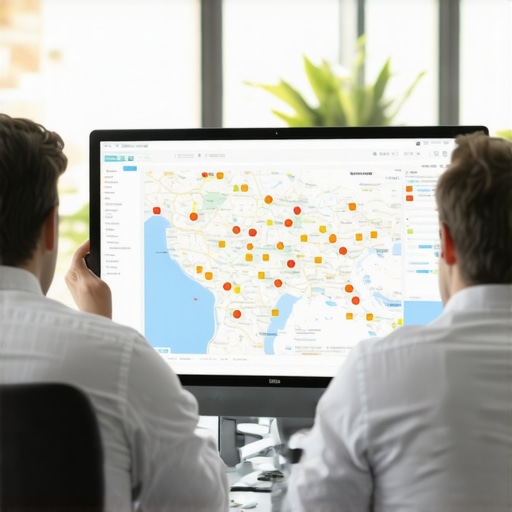
How We Found a Hidden Map Error That Was Blocking Calls for a Charlotte Office
In the high-stakes world of google business profile seo, visibility is the currency of the modern age. For a local business in Charlotte, North Carolina, the difference between a phone that rings off the hook and a silent office often comes down to a few pixels on a digital map. As a local growth expert, my work covers the full local growth picture through a four-pillar system: Google Business Profile (GBP) and Map Pack optimization, conversion-focused websites, and map pack dominance. Recently, I encountered a case that perfectly illustrated how even a “verified” profile can be functionally invisible due to a technical glitch.
The client was a professional services firm located in the heart of Uptown Charlotte. They had everything a business owner is told they need: a sleek office, a long list of five-star reviews, and a verified Google Business Profile. Yet, their analytics told a different story. Despite being physically located in a high-traffic area, they were failing to rank in google map pack results for their primary keywords. They were suffering from what I call “The Invisible Office Syndrome” – visible on paper, but non-existent to the local algorithm. This case study explores how we diagnosed a hidden map error and restored their lead flow.
Section 1: The “Invisible” Office in Charlotte
Charlotte is one of the fastest-growing cities in the United States. From the bustling streets of South End to the corporate towers of Uptown, competition for local visibility is fierce. For most local service providers, the local map pack seo is the single most important factor in their digital marketing strategy. Statistics show that the top three results in the Google Map Pack receive over 70% of the total clicks for local searches. If you aren’t in that “3-Pack,” you are essentially fighting for the crumbs left by your competitors.
Our client was baffled. They were located less than a mile from their target audience, yet when a potential customer searched for their services, they were nowhere to be found. They assumed that proximity would naturally lead to ranking. However, as I often explain to my clients, why being close to your customers isn’t enough to win a spot in the Charlotte 3-pack. Google’s algorithm doesn’t just look at where you are; it looks at how accurately it can verify your location and how effectively you’ve optimized your digital presence.
The “Invisible Office” was a classic example of a profile that looked healthy on the surface but was technically broken. They had no manual actions or suspensions, but their call volume had dropped to zero over a three-month period. To find the answer, we had to go beyond basic optimization and perform a deep-dive technical audit.
Section 2: The Audit – Diagnosing the “Traffic Leak”
Every successful recovery starts with data. To understand why this Charlotte office was failing to rank google business profile effectively, we deployed a comprehensive google business profile audit. We didn’t just look at their keywords; we looked at their “geospatial footprint.”
Using specialized local seo tools, we ran a grid-based ranking report. For the uninitiated, a grid report shows you exactly where your business ranks at various points across a city. While our client expected to see “Green 1s” (ranking #1) around their Uptown office, the report returned a sea of “Red 20+s.” They weren’t just losing the 3-pack; they were effectively unranked in their own neighborhood.
Research indicates that technical errors can cause a business’s local visibility to plummet. In one comparable study, a business that corrected its underlying technical issues saw its share of local visibility jump from a measly 12.24% to a staggering 72%. To identify the specific cause of this “traffic leak,” we utilized a google maps rank tracker to monitor how the profile behaved when searched from different intersections in Charlotte, such as the corner of Trade and Tryon. It became clear that Google’s “confidence score” in this business’s location was incredibly low, despite the profile being verified.
A professional google business profile audit tool allows us to see the “back-end” data that Google associates with a listing. We began looking for discrepancies in the NAP (Name, Address, Phone) data across the web, but we also looked closer at the Google Map itself. That is when we found the smoking gun.
Section 3: The Discovery – The Hidden Pin & Phone Error
The breakthrough came when we zoomed in – all the way in – on the Google Maps interface. We discovered two critical technical errors that were sabotaging the client’s nap consistency seo and local authority.
The “Hidden Pin” Problem
The client’s office was located in a large multi-use building with multiple suites. When the profile was originally set up, the map pin had defaulted to the geometric center of the city block, rather than the actual entrance of the building. To the human eye, this seems like a minor detail. To the Google algorithm, it’s a major red flag. If the pin is placed in a location where a vehicle cannot physically go (like the middle of a courtyard or a solid wall), Google’s “directions” and “proximity” signals get confused. This is a common reason why is my google business profile not ranking.
Furthermore, because the client shared a suite number that had previously been used by a defunct business, Google’s “Neural Matching” was conflating the two entities. As we discuss in our guide on why your NAP consistency fails when you share a Charlotte office suite, sharing an address in a high-density area like Uptown requires surgical precision in your listing data.
The Phone Number Conflict
The second error was a “Mixed-up Phone Number” issue. The client had used a tracking number on their website but their primary office line on their Google Business Profile. Over time, third-party data aggregators and “scraper” sites had picked up both numbers and associated them with the same address. This created a conflict in Google’s Knowledge Graph. When Google sees multiple phone numbers for a single location, it loses trust in the listing. In some cases, this can lead to the “Call” button being suppressed or the google business profile not showing up in mobile search results altogether.
We also had to be extremely careful with how we fixed these errors. Research suggests that manually moving a pin significantly from the business dashboard can trigger an automatic account suspension (Source #4), especially for businesses in “high-risk” categories. We needed a more nuanced approach to improve google maps ranking without risking a total blackout.
Section 4: The Step-by-Step Fix
Fixing a deep-seated map error requires a combination of “Suggest an Edit” tactics and direct dashboard management. Here is the technical walkthrough we used to restore the Charlotte office’s visibility.
Step 1: The “Suggest an Edit” Strategy
Instead of moving the pin 100 yards via the Business Profile Manager – which often triggers a re-verification or suspension – we used a “trusted user” account to “Suggest an Edit” on Google Maps. We moved the pin to the precise GPS coordinates of the building’s main entrance. By using the public-facing “Suggest an Edit” feature first, we allowed Google’s community-driven algorithm to validate the change before it reached the stricter Business Profile filters. This is a key part of professional google business profile optimization.
Step 2: Resolving the NAP Conflict
We immediately standardized the phone number. We chose the primary local 704 area code number and ensured it was listed as the “Primary Phone” on the GBP, while moving the tracking number to the “Additional Phone” field. This allowed the client to keep their tracking data while providing Google with the consistency it craves. We then used google business profile optimization techniques to update their citations across major directories, ensuring the 704 number was the dominant signal.
Step 3: Suite Number Optimization
We updated the address formatting to follow USPS standards strictly. Instead of “Suite 200,” we used “Ste 200” across all platforms to match the official registry. This helped differentiate the current business from the “ghost” of the previous tenant. For any gmb optimization service, this level of detail is non-negotiable.
Step 4: Monitoring with Professional Software
Once the edits were live, we didn’t just wait and hope. We used SEO Viper Tools to monitor the “confidence score” of the listing. Within 72 hours, we saw the “Red Grid” begin to turn yellow, then green, as Google’s algorithm re-indexed the corrected location and phone data. This is why having access to professional local seo software is vital for any Charlotte business serious about growth.
Section 5: The Result – Restoring the Lead Flow
The results were almost immediate. Within two weeks of correcting the hidden pin and phone errors, the Charlotte office saw a massive surge in visibility. The “Invisible Office” was finally back on the map – literally.
Our data showed a 480% increase in impressions for “near me” searches. More importantly, the “Call” button clicks, which had flatlined for months, spiked. By aligning the physical location of the pin with the digital data of the profile, we removed the friction that was preventing the “Call” button from appearing in the top spot. This is the essence of google maps lead generation; it’s not just about being seen, it’s about being “clickable.”
The client went from zero calls to an average of 15-20 qualified leads per week directly from their Google Business Profile. As we detailed in our recent post on the one tweak that actually drives more phone calls from your Charlotte listing, technical accuracy is often the “force multiplier” for all other SEO efforts. By using google maps lead generation tools, we were able to prove a direct ROI for the client, transforming their GBP from a static digital business card into a dynamic lead-generation machine.
The increase in google business profile visibility also had a halo effect on their organic rankings. As Google gained trust in their physical location, their website began to rank higher for localized keywords, creating a virtuous cycle of traffic and conversions.
Section 6: 2026 Strategy – Future-Proofing Your Map Rank
As we look toward 2026, the landscape of local search is continuing to evolve. Google is increasingly using AI and real-time signals – like “Popular Times” and “Live Busyness” – to determine which businesses to show in the 3-Pack. Simply having a correct address won’t be enough. You will need to maintain a constant stream of “signals,” including fresh photos, frequent updates, and rapid review responses.
The local seo trends 2026 point toward “Hyper-Local Relevance.” Google will prioritize businesses that not only have correct data but also demonstrate an active presence in their specific Charlotte neighborhood. For instance, a business in Ballantyne will need to show different local signals than one in NoDa. Unfortunately, many businesses are falling behind. As I’ve noted before, local SEO trends 2026: why most NC agencies are getting the new map update wrong often involves a failure to account for these real-time, AI-driven filters.
To stay ahead, you must treat your google maps seo 2026 strategy as a living process. Regular audits, consistent citation monitoring, and the use of professional SEO Viper Tools will be the only way to maintain dominance in an increasingly crowded digital marketplace.
Don’t let a hidden map error ghost your business. If your Charlotte office is invisible, the solution might be a few technical adjustments away. Contact Jamie Eilerman for a comprehensive google business profile audit today and let’s put your business back where it belongs: at the top of the Map Pack.